Drones are becoming increasingly popular for hobbyists and professionals alike. They can give us views of the world that we never even imagined before.
But not all drones are the same, and depending on their size, power, and intended use, they’ll be subject to specific rules and regulations set by the Civil Aviation Authority (CAA).
In the UK, drones are separated into three categories: open, specific, and certified. In this post, we’ll discuss the differences between the three classifications to help you better understand what kind of drone you have (or want) and what steps you need to take to fly safely and legally.
Flying A Drone In The UK: Rules And Regulations
Flying a drone is lawful in the United Kingdom, as per the Civil Aviation Authority of the United Kingdom (CAA). However, you should be informed of, and be compliant, with all the rules and regulations set by the authorities.
Drone rules in the United Kingdom and Europe altered by the end of 2020. As a result, there has been considerable uncertainty over what is and isn’t permitted. Furthermore, there is confusion about the requirement of a drone license.
That isn’t aided by the fact that the UK is still in the transition period. Existing drones can now be operated under new restrictions that will be amended on January 1, 2023.
Nevertheless, the new drone laws have resulted in some exciting major innovations. If you possess a drone that weighs just under 250g, you have the permit to fly it anywhere. One such drone is the DJI Mini 2.
The only thing you need to care about is to steer clear of any flight restriction zones. You should also have a permit from the landowner to land and take off.
Drone Operation Categories
The revised drone regulations in the United Kingdom and Europe abandon the distinction between recreational and commercial flight and favour a risk-based strategy. The prevalent assumption is that large, heavier drones offer a greater threat than compact, light drones.
The rules divide drone operations into three different types: certified, specific, and open. In addition, there are five distinct drone categories, ranging from C0 to C4. The drones are divided into categories based on their design, speed, and weight.
Yet, there are presently no certified drones, and DJI claims that there is also no agreed-upon procedure for categorising drones.
The Open Category
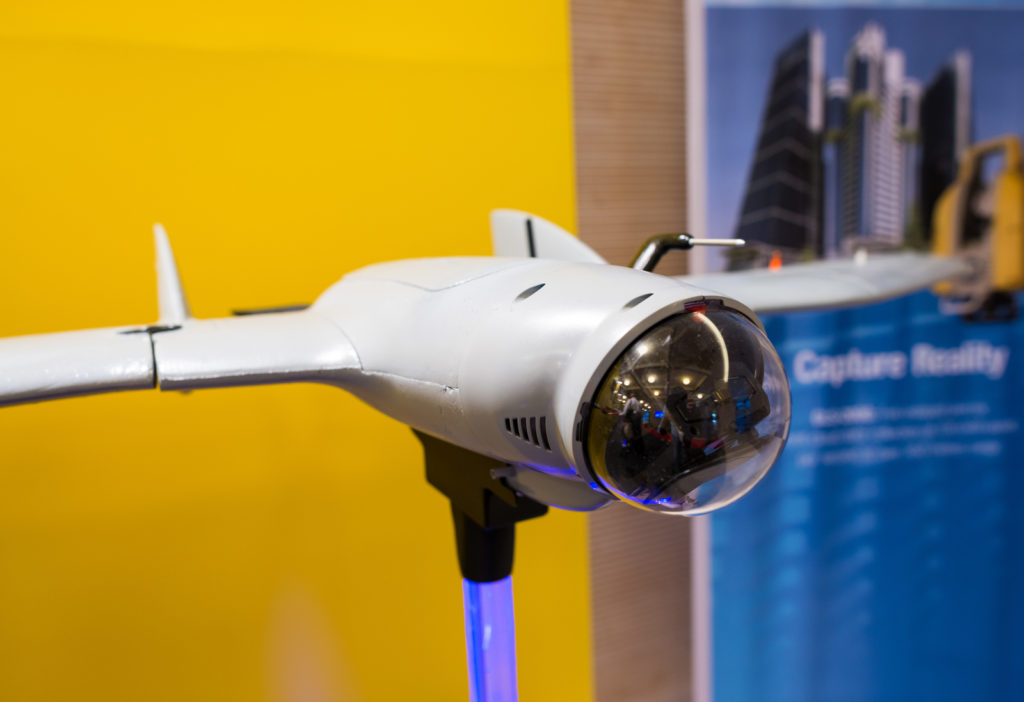
Photographers will probably be most-interested in this category – as opposed to the other two. The Open Category allows you to operate a drone weighing under 25 kilograms at a maximum of 120 metres/400 feet.
The only condition is that it remains within VLOS (visual line of sight). A1, A2, and A3 are the three distinct sub-categories of the Open Category.
A1 – ‘Fly Over People’
This applies to drones weighing below 250 grams. These can be flown over people but not crowds because these drones are low-risk. You don’t even need any qualifications to operate this sort of drone (aside from acing the Flyer ID test).
Current drones (known as legacy drones) that weigh below 500 grams, like the original DJI Mavic Air (430 grams), are allowed in this sub-category until January 1, 2023. After this period, they should be flown according to the A3 sub-category’s requirements.
A2 – ‘Fly Close To People’
To operate in the A2 sub-category, you’ll require an A2 Certificate of Competence and a class C2 drone. In normal situations, it enables you to operate the drone as near as 30 metres horizontally from individuals.
However, in low-speed mode, this range can be lowered to 5 metres. Legacy drones weighing under 2kg can be operated in the A2 category till January 2023. Mavic 2 Zoom, DJI Mavic 2 Pro, and the DJI Air 2S come in this category.
The pilot must possess the A2 Certificate of Competence. Moreover, the drone should be at a minimum of 50 metres away from humans. These drones should be flown in the A3 sub-category post-January 2023.
A3 – ‘Far From People’
Drones weighing up to 25 kilograms are allowed in this group. However, they should be flown at a minimum of 150 metres away from recreational, industrial, commercial, or residential locations.
Additionally, these drones have to be 50 metres away from individuals. Starting January 1, 2023, any legacy drones weighing over 250g have to be flown according to the regulations of this category. This rule is independent of the pilot’s certification.
Specific Category
This drone operating category is for UAVs that weigh under 25 kilograms but whose actions are more dangerous than those permitted by the Open Category. You should have an operational authorisation or a VGC from the aviation authority (the CAA in the U.K.) to fly in this category.
Certified Category
It is for the most dangerous drone operations, such as flying drones weighing more than 25 kilos.
General Rules And Regulations To Fly Your Drone Safely In The U.K.
Based on CAA, these are the most significant rules to know when operating a drone in the United Kingdom. The CAA must grant authorisation for commercial drone activities in the United Kingdom.
For further information on how to gain authorisation, we have listed some important points:
- You are solely accountable for the safe operation of your drone
- You should not jeopardise anything or anyone with your drone, including any items that you release from it
- All commercial drone operations must have insurance
- When the drone is airborne, you must maintain it in your line of sight at all times. This guarantees that it doesn’t crash with anything, particularly other aircraft
- Drones should not fly higher than 122 metres (400 feet) above the ground, irrespective of their mass
- If the drone has a camera, there are some additional restrictions. These rules are about where you can fly it and how near you can operate it to other persons or objects that aren’t engaged. You should acquire prior approval from the CAA to fly within these regions or nearer than the minimum ranges specified
- You should first obtain authorisation from the flight information service unit, the air traffic control, or the operator of the protected aerodrome before flying a small UAV closer than 5 kilometres (3 miles) from the border of a defended airfield (known as the “runway protection zone”)
- You should not operate a drone within 150 metres (492 feet) of any crowded place or organise an “open-air assembly” of over 1,000 people. Moreover, you can’t fly even within 50 metres (164 feet) of any uninvolved structure, vehicle vessel, property, or person. You must obey additional codes not to soar far above the surface at 122 metres (400 feet)
- It would help if you did not induce or allow the dropping of any material or creature (whether or not connected to a parachute) from a small UAV in a manner that puts proper or people in danger
Things To Know Before Flying A Drone
- Drones can and often do pose a serious threat to manned aircraft. Pilots (such as military pilots) have noted more than 50 near-misses with drones in the past year alone
- Maintain your drone in sight and under 400 feet
- Avoid flying a drone close to an airfield or an airport or near planes. Endangering the stability of an aircraft in flight is a punishable crime
- If you want to operate a drone for business reasons (to make money), you’ll need approval from the CAA to verify that any photographs you take don’t violate privacy laws
Wrap Up
Drones are taking over the world extremely fast. Be it for commercial or recreational purposes, many people want to get their hands on this wonderful creation and fly it.
However, it is essential to fly it within the rules and regulations made by the authorities. In this way, you can guarantee a safe and hassle-free flight.
We hope this article answered your questions, and now you are clear about operating your drone in which category. So, what are you waiting for? Get flying!
- SMED Manufacturing: Reduce Changeover Times & Boost Efficiency - January 30, 2026
- Aviation Lifecycle Services: Maximizing Safety, Efficiency, and Compliance Through Digital Strategies - December 1, 2025
- Syringe Pump Automation: Elevating Laboratory Standards - November 3, 2025