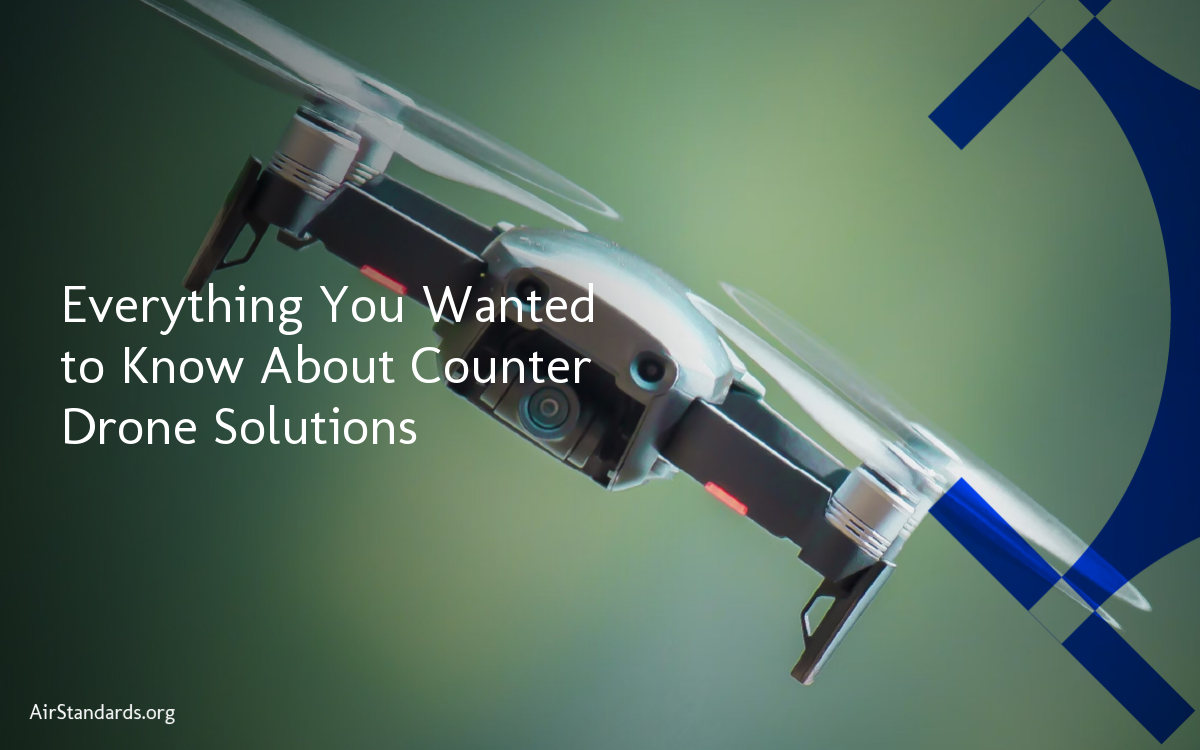
Counter drones have been around for a long time. Counter-drone solutions are currently being used in the military bases and law enforcement to monitor and identify drones and protect citizens and businesses from drones invading their privacy or causing further harm.
But what are these devices exactly?
Let’s take a closer look at the history of counter-drone solutions, how they work, and how they are used today.
What are Anti Drone Systems?
Unwanted air devices and unmanned drones are detected and intercepted by anti-drone system devices.
They are used to defend runways, essential infrastructure, public places like arenas, military sites and more.
What are Drone Integrated Detection Solutions
New integrated solutions are being launched to assist companies in meeting issues and employ drones to collect information.
The future of drones employed for diverse activities is this counter-drone technology. So, what are they?
The Simple Sensor
You might invest in a system (UAS) that’d allow your UAV to transport a variety of sensors. This includes a core software and hardware set-up in flights, where the sensor can be interchanged.
These integrated sensor systems can be used, and you won’t have to replace your UAV. Simply put in the required sensor. Then UAV will be ready to go on a data collecting trip in a matter of minutes.
The Sensor Range include:
- Echosounders are sonar-based devices that survey various land and water bodies.
- Magnetometers that aid in the discovery of underground magnetic deposits and objects.
- Metal detectors are used to locate metal, magnets and non-magnets that are buried beneath.
- Sensors for Search and Rescue are used to identify and rescue persons or things.
The F-Series Vad Drone Detection System
The F-series static has a camera optical anomaly detection CUAS software. This is a self-contained technology capable of operating without the need for upgrades.
Data is saved on the gadget and may be viewed using a web browser.
The P-Series Vad Drone Detection System
The P-series has similar detecting capabilities as the F-series. However, this is in a more portable package.
It features a tough casing and is ideal for outdoor usage. It can also be run on battery capacity.
Counter Drone Monitoring
Drone monitoring equipment can be inert in the market (merely watching or listening). They can also be reactive products (sending out signals out and assessing the response) and can fulfill various purposes.
The function includes:
Detection
The term detection refers to the tech’s ability to sense drones. However, by itself is rarely sufficient. A sensor that identifies drones, for instance, could also identify other objects.
Classification or Identification
Drone classification technology is typically capable of distinguishing drones from other sorts of vehicles. These include airplanes, railways, and other vehicles.
Locating and Tracking
Some gear may recognize a single product of UAV or perhaps even the drone’s or operator’s electronic fingerprints as a Port number. This degree of recognition can be useful in a criminal action.
Alerting
Knowing the exact position of the drone and controller improves your situational awareness. It also boosts the ability to launch countermeasures. New tech will aid in tracking the whereabouts of the drones in real-time.
What is Counter Drone Surveillance Equipment
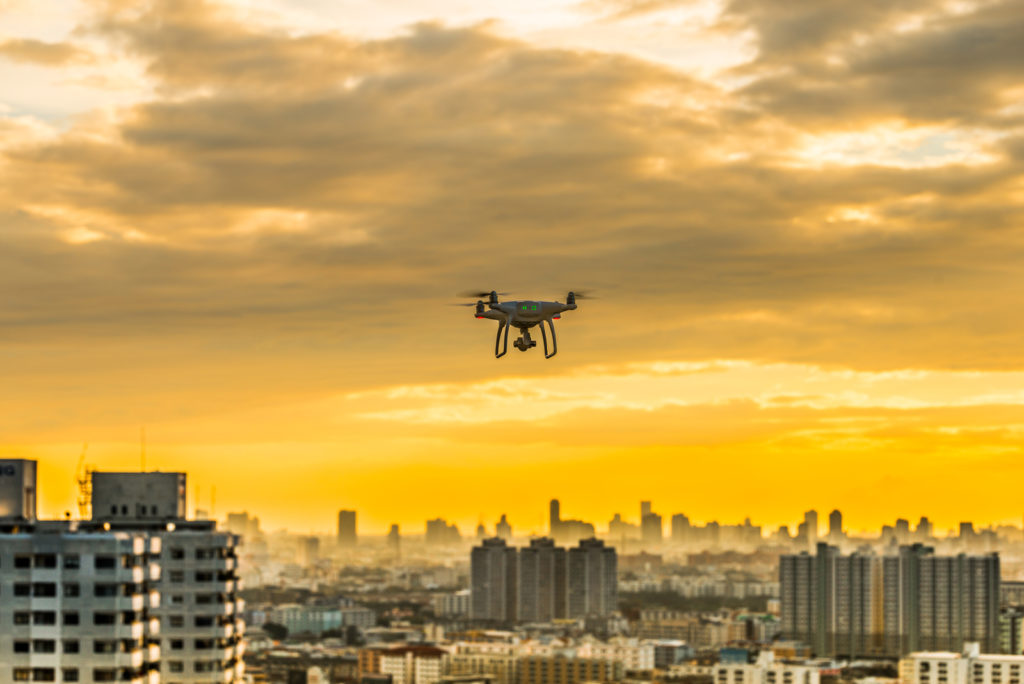
To combat the risks presented by UAVs, under-drone devices are also being developed. Authorities like the police and armed units throughout the world have devised a variety of methods for detecting these airborne devices.
The Analysers of Radio Frequency
RF Analysers are made up of one or many stations for receiving radio signals. It also has a CPU for analyzing the Radio spectrum. They are employed in an attempt to identify radio contact between a UAV and its operator.
Pros
- Affordable
- Detects many types of drones
- No license or permit needed
Cons
- Cannot track drones in all circumstances
- Not very effective in crowded places
The Sensors for Acoustics
Typically, a detector or mic array captures the sounds emitted by a UAV. This determines its heading. For approximate triangulation, additional sets of microphones might be utilized.
Pros
- Can detect all drones near to the field
- Detects anonymous close UAVs
- Easily transportable in a short period
Cons
- Has a shorter range
- It May does not work in loud environments
The Optic Sensor
Basically, it is a recording device. In addition to ordinary light lenses, optical sensors may also be used for thermal or infrared equipment.
Pros
- Gives drone visuals, and its load
- Has the ability to record movement through videos
- Provides forensic evidence
Cons
- May not be available for self-detection
- Can sometimes give out false alarms
The Radar
Radar is an effective technique for detecting UAVs. Nevertheless, there are several obstacles to overcome. They do not pick up on smaller targets.
It brings in the drone’s height and velocity, as well as a relatively tiny radar cross-section. This makes distinguishing noise from the real target exceedingly challenging.
Pros
- It has a wide range
- Great with localization
- Can manage many targets
Cons
- Detection depends on the size of the drone
- Needs a license of transmission
What are the Countermeasures of Drone Technology
While the tech is ready, most nations’ present rules prohibit deploying some of the following devices for drone neutralization. Exemptions are allowed for law enforcement and military organizations on occasion.
RF Jamming
An RF drone Jammer is an output device that gives a significant quantity of RF energy to the drone. This is done by disguising the controlling signal. It can be hand-controlled or stationary.
Pros
- It has neutralization that is not kinetic response.
- It is affordable
Cons
- It has a shorter range.
- Can change the behavior of the drone
The Location Spoofers
This aerial system delivers new signals to the UAV, substituting the navigational connection with Geostationary satellites. In this manner, the drones are ‘spoofed’ into believing it is elsewhere.
The spoofer may manipulate the UAV’s location by continuously adjusting the Gps data.
Pros
- It has neutralization that is not kinetic.
- It is low cost
Cons
- Can disturb other radio signals
- Has a comparatively shorter range
High-Performance Radiation Devices
These create an Electromagnetic Pulse that can cause electrical device disruption. This is because of the damaging voltages and currents it creates. It has the potential to disrupt radio links and harm or even destroy the electrical equipment in drones.
These systems may include an antenna that directs the EMP in a specified direction, reducing collateral damage potential.
Pros
- The system works with all drones within range
- It can be halted effectively
Cons
- Very costly
- The possibility of accidentally interrupting communications
Multiple Reasons for A Drone Detection Or Counter Drone Solution
There are currently many initiatives of drone detection for protection of lives and locations. With UAVs, many hidden dangers need to be detected at the earliest, done by counter-drone solutions.
Keeping an Eye Out for Harmful Emissions
Chemical detecting sensors are increasingly being installed on drones. These might pick on harmful spills to avoid damage.
Scan for Explosive Materials
Drone aircrafts are being designed to map, identify, and explore land mines automatically. This is intending to clear the planet of lethal weapons in less than ten years.
Drone Identification Technology Advancement
With detecting systems and technology, these systems aid in the prevention of life-threatening crises. Operational Intelligence and artificial Intelligence can be used in any airspace, to combat a drone threat.
Making Sense Of Drone Defense
If the flying item is determined to be a hazardous drone, the next phase is initiated: countermeasures.
The optimal counter-drone option for defense requirements will almost certainly be a combination of the technologies listed above. Is there a right mélange? Maybe not. It all depends on the defense needs and operations.
These systems collaborate with several integrators across the globe. They combine these radar systems into adaptable counter-drone devices for ease.
Picking The Right Counter Drone Solution
Drone safety is a highly complicated issue in which many elements must be considered. This is to provide the best feasible solution for a specific location.
So, what do you need to look for?
Request References
Any genuine counter-drone supplier will be prepared to give the customer and partner testimonials.
Also, keep in mind the maximum bandwidth ranges.
Commitment
Post-sale service speaks of the firm’s reputation and commitment. Look for a drone security firm that watches over.
Post-sale support, troubleshooting and software upgrades are all required.
Right Knowledge
Examine a possible company’s expertise and experience. The firm and team must be experienced in security and defense.
For their technology to be effective, it must perform as advertised.
Our Drone Detection Services in Action
Our company’s anti-drone system detects, classifies, and tracks drones. This is by using passive surveillance, image sensor and neutralizes threats by blocking drone transmission.
We are a multi-sensor architecture designed to provide full protection against drone attacks.

- SMED Manufacturing: Reduce Changeover Times & Boost Efficiency - January 30, 2026
- Aviation Lifecycle Services: Maximizing Safety, Efficiency, and Compliance Through Digital Strategies - December 1, 2025
- Syringe Pump Automation: Elevating Laboratory Standards - November 3, 2025