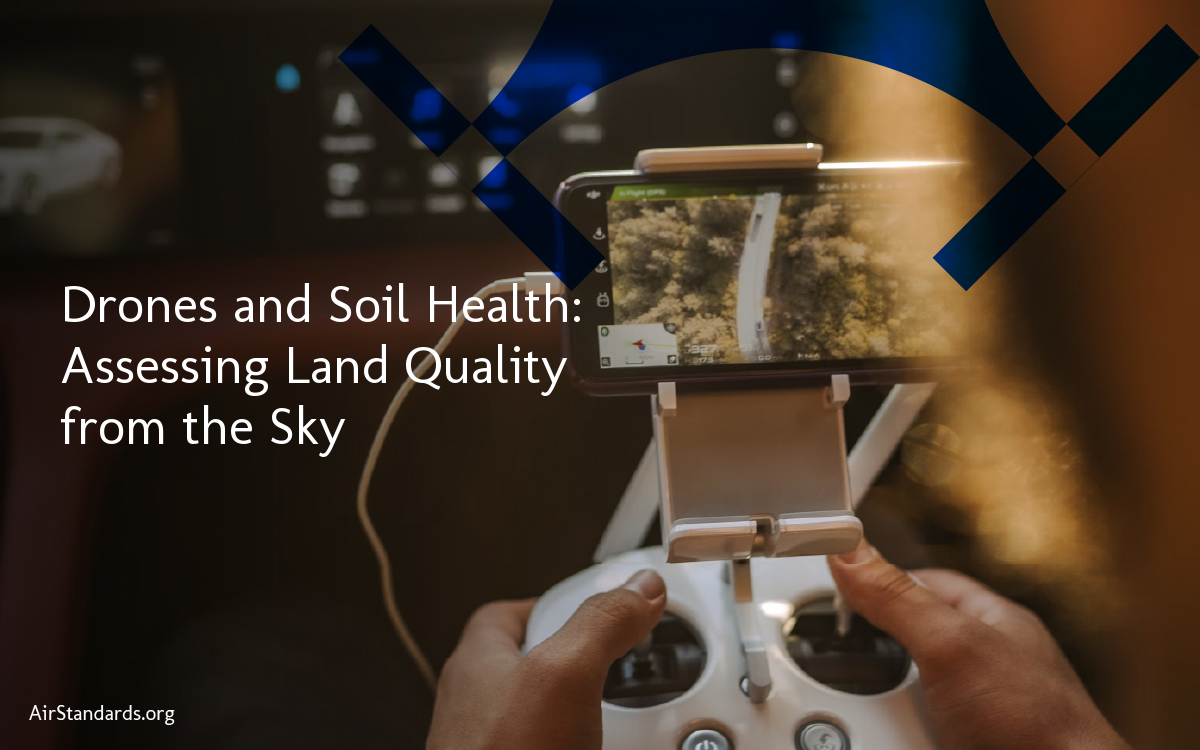
In the United States, we are embracing the power of aerial technology to assess land quality and monitor soil health. The use of drones provides us with a unique perspective, allowing explicit geo-referencing and before-and-after monitoring for valuable insights. This innovative technology has proven to be particularly effective in industries such as waterway science and management.
Drones have enabled us to monitor riverbank morphology, vegetation changes, erosion, and deposition. By understanding the impacts of flow conditions on ecosystem function, we can make informed management strategies. In Australia, drones have been successfully used in Flow-Monitoring, Evaluation, and Research (Flow-MER) programs, providing detailed data on geomorphological processes and vegetation cover in the Murray Darling Basin’s Goulburn River and Edward/Kolety-Wakool River.
With the help of drones, we can now gather detailed data on soil composition, topography, and vegetation cover across large areas of land. This information enables us to make informed decisions about land management strategies, leading to improved accuracy and cost savings. Drones also give us access to hard-to-reach areas and the ability to monitor soil conditions in real-time. By using this technology, we can proactively monitor soil degradation and erosion, leading to better conservation efforts and the fight against topsoil degradation.
The Benefits of Using Drones for Soil Degradation and Erosion Monitoring
Drones offer several advantages when it comes to monitoring soil degradation and erosion. These unmanned aerial vehicles can efficiently cover large areas of land, providing detailed images and data that help researchers and farmers make informed decisions about land management strategies.
One of the key benefits of using drones is their ability to quickly and accurately capture high-resolution images of soil composition, topography, and vegetation cover. This data can then be analyzed to identify areas of degradation and erosion, allowing for proactive monitoring and targeted interventions.
Additionally, drones enable access to hard-to-reach areas that may be challenging to survey on foot. This allows for comprehensive monitoring of soil conditions in real-time, helping to detect and address issues such as moisture imbalance and nutrient deficiencies.
Benefits of Using Drones for Soil Degradation and Erosion Monitoring:
- Efficient coverage of large areas
- Detailed images and data for informed decision-making
- Proactive monitoring and targeted interventions
- Access to hard-to-reach areas
- Real-time monitoring of soil conditions
It is important to note that while drones offer numerous benefits, they do have limitations. One of the most significant limitations is their battery life, which can restrict the amount of time they can spend in the air. Additionally, extreme weather conditions such as high wind or heavy rain may limit the usability of drones for soil degradation and erosion monitoring.
Limitations of Using Drones for Soil Degradation and Erosion Monitoring:
- Limited battery life
- Limitations in extreme weather conditions
Despite these limitations, the use of drones in soil degradation and erosion monitoring has proven to be valuable in terms of cost savings, improved accuracy, and the ability to access hard-to-reach areas. As drone technology continues to advance, we can expect further developments that will enhance their capabilities in monitoring soil health and supporting sustainable land management practices.
| Benefits of Using Drones for Soil Degradation and Erosion Monitoring | Limitations of Using Drones for Soil Degradation and Erosion Monitoring |
|---|---|
| Efficient coverage of large areas | Limited battery life |
| Detailed images and data for informed decision-making | Limitations in extreme weather conditions |
| Proactive monitoring and targeted interventions | |
| Access to hard-to-reach areas | |
| Real-time monitoring of soil conditions |
Exploring the Potential of Drones for Soil Degradation and Erosion Control
Drones have emerged as a powerful tool for soil degradation and erosion control, offering a unique perspective from the sky. With their ability to capture detailed aerial photographs, drones enable us to measure land surface changes, identify areas of soil erosion and degradation, and track changes over time. This technology has the potential to significantly improve our understanding of soil health and develop effective control measures.
Equipped with sensors, drones can detect changes in soil moisture and other environmental factors that impact soil health. These findings help farmers and researchers proactively monitor soil composition, density, and moisture throughout the growing season, allowing for timely adjustments to maximize crop health. By tracking erosion, plant density, and nutrient depletion, drones aid in the fight against topsoil degradation.
Furthermore, drones provide a bird’s-eye view of the land, bringing valuable data on soil composition, topography, and vegetation cover. This information is crucial in developing strategies for better land management and conservation. With advanced land monitoring technology, farmers and researchers can make informed decisions about land management practices, such as targeted irrigation and fertilization, leading to sustainable agricultural practices.
Table: Applications of Drones in Soil Degradation and Erosion Control
| Application | Benefits |
|---|---|
| Aerial Photographs | Measure land surface changes |
| Soil Monitoring | Proactive assessment of soil composition, density, and moisture |
| Conservation Strategies | Develop effective control measures for soil degradation and erosion |
| Land Management | Informed decisions on irrigation, fertilization, and crop health |
The potential of drones in soil degradation and erosion control is immense. As the technology continues to evolve, we can expect even more applications in this field, providing valuable insights that contribute to sustainable land management practices and the preservation of our soils for future generations.
How Drones Detect Soil Degradation and Erosion
Drones equipped with high-resolution cameras and remote sensing technology provide a powerful tool for detecting soil degradation and erosion. These aerial devices capture detailed images of the land, allowing researchers and farmers to analyze soil composition, topography, and vegetation cover in unprecedented detail. By harnessing the capabilities of drones, we can gain valuable insights into the impact of human activities on soil health and develop effective strategies for land management and conservation.
Using high-resolution cameras, drones capture images of the terrain, revealing subtle changes in soil composition and topography. These images, combined with remote sensing data, enable the identification of areas undergoing degradation and erosion. Drones can detect reflected wavelengths of light, highlighting different elements and collecting data on soil properties. With multispectral imaging sensors, drones can even pinpoint minute differences in soil composition, building a comprehensive picture of soil health and degradation.
The detailed images captured by drones provide a wealth of information for soil assessment. By analyzing these images, researchers and farmers can identify areas experiencing erosion and degradation, understand the impact of land use changes, and develop targeted land management strategies. Whether it’s identifying areas at risk of erosion, monitoring changes over time, or assessing the effectiveness of conservation efforts, drones offer a valuable tool for understanding and combating soil degradation.
| Advantages of Using Drones for Soil Degradation and Erosion Detection | Limitations of Drones for Soil Degradation and Erosion Detection |
|---|---|
|
|
Latest Developments in Drone Technology for Soil Degradation and Erosion Monitoring
Drone technology has made significant advancements in recent years, transforming soil degradation and erosion monitoring. Unmanned aerial vehicles (UAVs) equipped with cutting-edge multispectral sensors can efficiently survey large areas of land, providing crucial data on soil properties such as surface texture and moisture content. This technology allows for the creation of precise maps and a comprehensive understanding of soil conditions, enabling proactive monitoring of soil degradation over time.
One of the key benefits of using drones for soil degradation and erosion monitoring is the ability to evaluate the effectiveness of soil conservation efforts. By monitoring land use changes and tracking erosion patterns, researchers and farmers can better understand the impact of various management practices on soil health. This knowledge helps in developing targeted strategies to mitigate soil degradation and erosion, leading to improved land management and conservation.
Unmanned aerial vehicles equipped with multispectral sensors also contribute to the advancement of precision agriculture. They enable farmers to identify nutrient deficiencies and adjust fertilization practices accordingly, resulting in optimized crop health and increased yields. These drones can accurately measure soil moisture content and provide real-time data to inform irrigation strategies. By leveraging this technology, farmers can make data-driven decisions about seed planting patterns and implement sustainable practices for enhanced productivity.
The Future of Drone Technology in Soil Degradation and Erosion Monitoring
The future of drone technology in soil degradation and erosion monitoring looks promising. Ongoing research aims to enhance the capabilities of drones, allowing for more accurate and comprehensive data collection. Improved sensors and imaging technology will enable even finer analysis of soil composition and erosion patterns. Additionally, advancements in artificial intelligence and machine learning algorithms will facilitate the automated detection and analysis of soil degradation indicators, further streamlining the monitoring process.
| Advantages of Drone Technology for Soil Degradation and Erosion Monitoring | Limitations of Drone Technology for Soil Degradation and Erosion Monitoring |
|---|---|
|
|
The Importance of Soil Composition and Drone Soil Analysis in Agriculture
Understanding the soil composition is vital for effective crop management. Soil plays a key role in determining nutrient levels, moisture content, and overall crop health. With the advent of drone technology, farmers now have a powerful tool at their disposal to analyze soil conditions in a more efficient and accurate manner.
Drone soil analysis involves the use of advanced imaging technology and remote sensing cameras mounted on drones. These drones capture high-resolution images of the land, allowing farmers to assess soil nutrient levels and moisture content. By analyzing this data, farmers can make informed decisions about seed planting patterns, watering strategies, and fertilization practices.
A significant advantage of drone soil analysis is its ability to cover large areas of farmland quickly and effectively. Multispectral mapping enables farmers to understand soil quality across their entire agricultural land. With this information, farmers can take targeted soil samples and make adjustments accordingly, maximizing the productivity of their crops.
Proactively monitoring soil composition and conditions using drones helps farmers stay ahead of issues such as nutrient deficiencies, erosion, and soil degradation. By implementing sustainable land management practices based on drone soil analysis, farmers can achieve bigger and healthier yields while ensuring the long-term health and sustainability of their land.

- SMED Manufacturing: Reduce Changeover Times & Boost Efficiency - January 30, 2026
- Aviation Lifecycle Services: Maximizing Safety, Efficiency, and Compliance Through Digital Strategies - December 1, 2025
- Syringe Pump Automation: Elevating Laboratory Standards - November 3, 2025