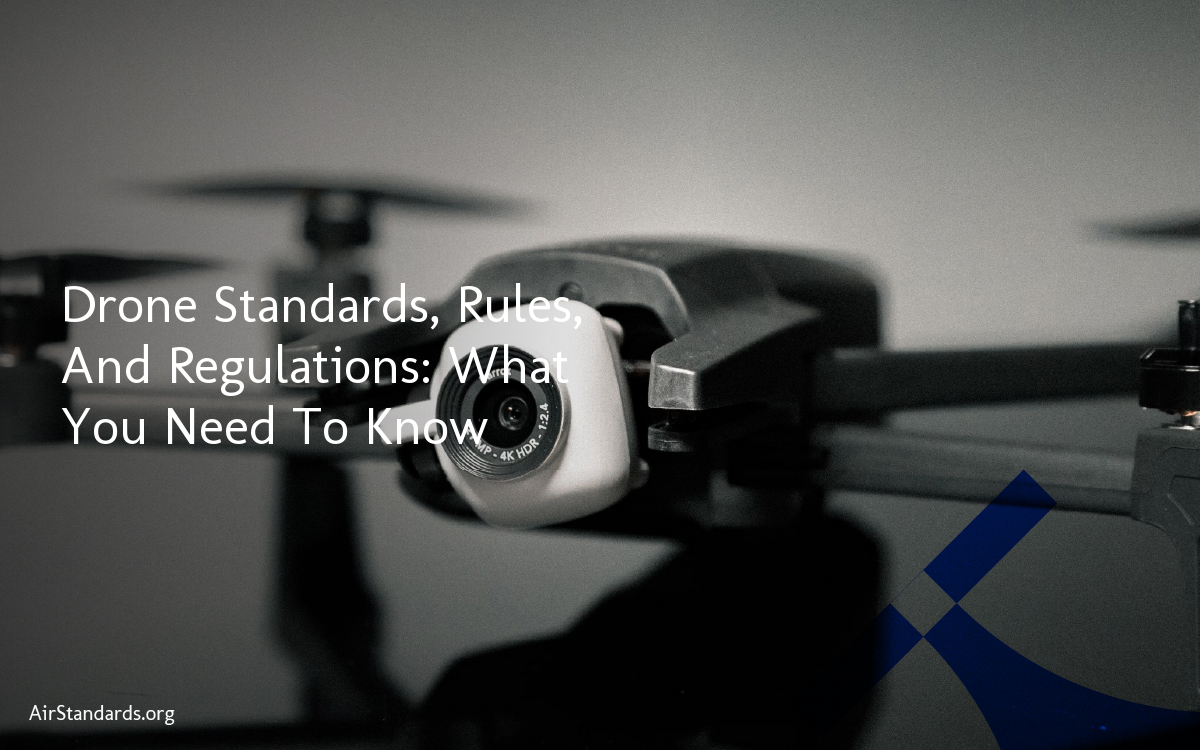
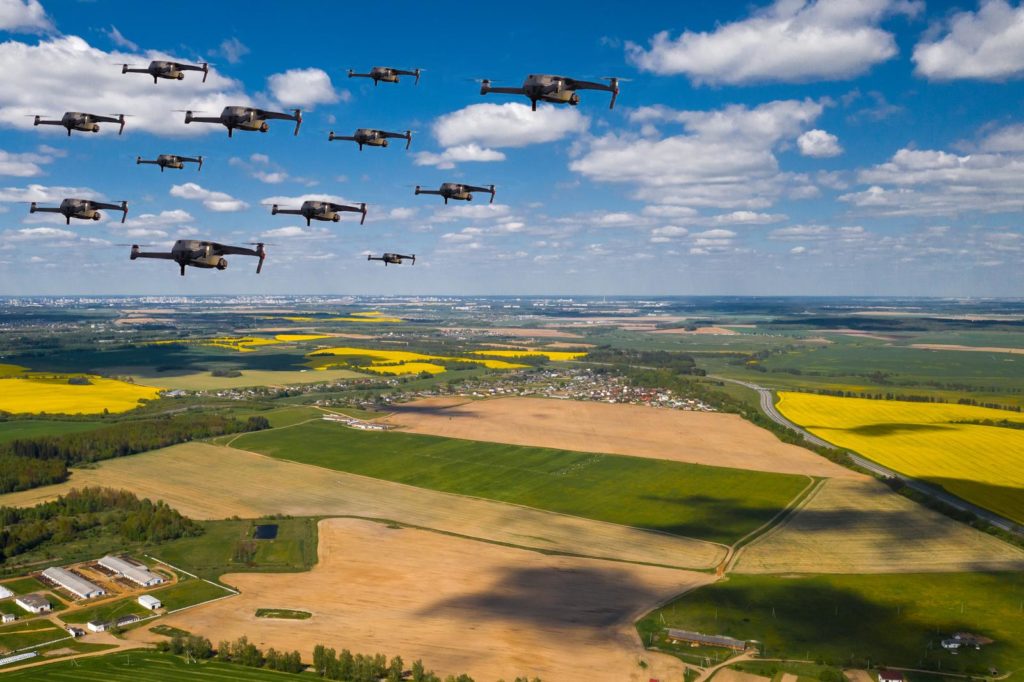
Drones are everywhere, and they’re becoming more sophisticated by the day. They’re being used for all sorts of tasks – from delivering packages and pizza to performing firefighting and more. But as they become more prevalent, so do the laws and regulations that govern their use.
This post will discuss the standards, laws, and regulations for drone use in the United Kingdom. We’ll also cover the two types of drone licenses you’ll need to operate your drone safely.
Finally, we’ll offer some tips for navigating drone regulations in your community. So, are you ready? Let’s dive right into it!
Are Drones Legal In The United Kingdom?
Long story short – yes. It is legal to fly drones. There are, nevertheless, regulations and rules that anyone must adhere to in order to stay on the right side of the law. Because UAVs are still relatively new, the law governing their usage is continuously changing. Thus, it would be best to stay on top of the latest developments.
Drones can be good for both commercial and private purposes, according to the “Civil Aviation Authority” (CAA).
Drone Registration
If you wish to operate a drone or a model airplane, you must register first. The registration contains the following items:
- To receive a flyer ID, everyone who wants to fly a drone should pass the theory test
- The individual in charge of the model aircraft or drone must first register to obtain an operator ID
The Civil Aviation Authority‘s official website has more registration information.
Airfield Restrictions
Drones can indeed be flown in numerous ‘unrestricted’ and open airspace areas within the UK. However, there are significant limits and constraints when flying abroad. These rules apply during all hours of the night and day, and they pertain to all kinds of uncrewed aircraft.
Drone operations are divided into categories based on the risk they represent to the general public plus other airspace users. Drones of a given type and weight are limited in where they can fly.
Additionally, other factors such as how close they can fly to unassociated persons, crowds, and densely populated regions also come into play. Drone flights will are available in three different categories:
- OPEN: Unmanned Aerial Systems (UAS) operations that pose no risk to external parties, divided into three subcategories: A1, A2, and A3. (mostly recreational/hobbyist use, with few commercial applications)
- Specific: UAS operations that are more complicated or do not fall under the Open category. (mostly for commercial purposes or flights authorized by a model flying club)
- CERTIFIED: UAS operations are extremely and pose a similar significant risk as manned aviation
Simply said, the greater the risk associated with a drone flying, the more limits and constraints are imposed. Certain limitations and restrictions pertain to all drone flights, while others apply solely to flights in specified categories.
For instance, drones flying for important reasons or drones of Specific weights/types can have an extended set of rules. This involves determining if the CAA must recognize the Drone Operator.
The authority would check if the Remote Pilot must possess any flying credentials or be registered. Finally, whether the drone must be insured will also play a part in the rules and regulations.
The Operator is the individual who is legally accountable for controlling the drone plus its operations (usually the owner). On the other hand, the Remote Pilot is the one who pilots the drone.
It’ll be the same individual in some circumstances. However, it can be distinct individuals in others. When they are the same individual, they should conform to the UAS Operator and Remote Pilot’s criteria.
The OPEN Category
In this category, we’d discuss the general restrictions for flying Legacy Drones in the OPEN class:
- Drones are not permitted to operate over crowds
- Drones should not fly inside a protected aerodrome’s “Flight Restricted Zone” (FRZ) and any other limited airspace sans prior approval
- Before taking off, the Pilot should confirm that the drone is in good working order. This ensures that the flight can be completed safely
- The Pilot should be in good health. He not be hindered by drugs, exhaustion, sickness, medication, injuries, alcohol, or other factors
- Without authorization from a competent emergency agency, the drone should not be operated near or inside a region where an emergency response is underway
- During the flight, direct, unassisted VLOS of the drone and its surrounding airspace should be followed at all times
- Drones should weigh under 25 kg when they take flight
If any of the mentioned rules are broken, the Pilot or/and the Operator may perpetuate certain violations. Based on which Subcategory the drone is traveling in, additional limitations and conditions pertain: — for example, A1, A2, or A3.
The Specific Category
Amendments to legislation by 2020 eliminated the difference between non-commercial and commercial drone operations. As a result, the CAA’s prior “Standard Permission” plus “Permission for Commercial Operations (PfCO)” frameworks have been phased out.
Operators can now undertake commercial operations in the OPEN Category provided they stay well within A1, A2, or A3 subcategories’ restrictions.
Operators who desire to undertake drone activities beyond the OPEN category must get approval to fly in the CAA’s specific type. The Operator will be given an “Operational Permission” if permission is given.
If authorization is given, the Operator will be granted an “Operational Authorisation” that specifies the boundaries within which drone activities may be conducted.
If a drone activity in the Specific category is conducted outside of the boundaries, there will be repercussions. The Pilot or/and the Operator are very likely to be guilty of multiple offenses.
Present “Permissions for Commercial Operations” (PfCOs) would be effective till they lapse or till January 1, 2022. (whichever is earlier). The CAA has published a document (ORS4/1449) that modifies current Permissions. Thus, this document aligns those with the newly revised “Operational Authorisations” granted on January 1, 2021.
Conditions for Flying in the Specific Category
- The Operator should either contract or employ pilots
- There has to be insurance coverage in place that complies with “EC Regulation No. 785/2004”
- Pilots should have a valid ‘NQE’ or ‘GVC’ qualification (or comparable) and keep proof of competency with them at all times when flying the drone
- Pilots should keep the drone within visual line of sight (VLOS) for the flight duration, out to a maximum of 500 meters horizontally. They could be aided by a single “Unmanned Aircraft Observer” who should be placed beside the Pilot. He should keep the drone as well as its surrounding airspace within VLOS for the entire flight
- A max flying weight or take-off weight under 25kg is required for drones
- Without permission, pilots should not fly inside the FRZ of a regional airport
- Pilots should not fly closer than 50 meters to any unassociated individual, except landing and take-off, when the range may be lowered to 30 meters
- Pilots should not fly over 120 meters from the nearest point on the surface of the earth
- The drone must be fitted with a certain mechanism that enables it to land if any control systems, including radio links, fail or are disrupted. The remote Pilot should have verified that such a mechanism is in working order before the aircraft takes off
- Pilots are not permitted to fly within 50 meters of any crowds
- The flights should always be carried out in line with the Operator’s current existing “Operations Manual,” which includes a site safety assessment. Furthermore, records of every flight should be kept
- The Pilot should be fairly certain about a certain thing. He should know that the aircraft is safe for the individual trip, plus loads are correctly secured. Additionally, he should also confirm that the flight can be safely completed, notwithstanding wind and different major wind patterns
- While flying within the Specific category under the permit, the Pilot should always keep a copy of ORS4/1449 and a copy of the applicable “Operating Permission” document
- Flights at nighttime must follow the authorized “Operations Manual” procedures and any additional conditions specified in the “Operational Authorisation” or CAA Permission
If the criteria mentioned above are not fulfilled for a drone flight, the Pilot or/and the Operator almost certainly break certain laws. Such a situation can only be avoided only on one condition.
If they have a non-standard Permission/”Operational Authorisation” granted by the CAA that absolves them from the above-written restrictions, they won’t face any consequences.
Types Of Drones
A novel Regulation came into force in the United Kingdom on January 1, 2021. It establishes manufacturer criteria (class C0 to C6) for any drones available for purchase after January 1, 2023.
This document will concentrate on drones that are already on sale and functioning in the UK. Why? It is expected that ‘C’ class drones will be on sale and flying in this airspace for several years. These are known as Legacy Drones.
Legacy Drones are classified into several categories based on their characteristics.
- Drones weighing less than 250 grams, comprising privately constructed drones with a top speed of 19 meters per second
These are suitable for the OPEN A1, A2, and A3 subcategories and the Specific Category. If the drone includes a camera and isn’t a “toy,” the Operator should be registered. Pilots are not required to register.
- Drones weighing between 250 and 500 grams
These drones can fly in the OPEN A3 and Specific categories and the OPEN A1 and A2 categories if the Pilot has a “Certificate of Competency” until December 31, 2022. Operators and Pilots have to be registered.
- Drones weighing 500 g to 2 kg
These drones have the permit to fly in the OPEN A3 and Specific categories, as well as the OPEN A2 type, till December 31, 2022, only if the Pilot has a “Certificate of Competency.” Pilots and Operators are required to register.
Only the OPEN A3 and Specific categories are allowed to fly these. Operators and pilots are required to register.
If you want to operate the drone for business purposes, you’ll need to get a license first from CAA and follow additional rules. Check CAA’s website for the most up-to-date information and rules and regulations on drone use to seek advice on operating privileges.
Two Types of Drone Licenses
In the United Kingdom, there are two kinds of drone licenses: the “A2 CofC ” plus the “Operational Authorisation.”
- The “A2 Code of Conduct” applies to operations in the Open Category
- For operations within Specific Category, the “Operational Authorisation” is required. You can apply for an “Operational Authorisation” after finishing a VGC drone training course
A2 CofC Drone License – Fly-in People’s Vicinity
You can fly approximately 50 meters horizontally of unassociated individuals with an A2 CofC drone license. Such a drone license can be used for both business and recreational purposes.
VGC Drone License – For Specific category
To travel in the Specific Category, you’ll need a VGC to apply for “Operational Authorisation” from the CAA. It’s for operations that fall beyond the Open Category and is targeted at business drone operators.
Certain advantages are operation inside 150 meters of any industrial, commercial, or recreational place. Moreover, you can land and take off until 30 meters from unassociated individuals.
Navigating Drone Regulations
Drones used only for leisure are not required to be inspected and approved (in the same manner as business drones). But there are still rules that a recreational drone operator MUST follow when conducting any recreational flight.
Here are certain things you should keep in mind while flying a drone staying within the restrictions:
- Maintain your drone in line of vision so that you can observe and escape other objects — this is known as VLOS or “Visual Line of Sight”
- Observe the drone manufacturer’s recommended guidelines on each flight
- Only fly if you are confident in your ability to complete the flight safely
- Do not permit or cause any item to be thrown from the plane
These are only a few of the points out of the many you need to keep in mind. You need to make sure to know all rules like the back of your hand. Furthermore, you need to respect others in your vicinity and not disturb them.
Wrap Up
Drones are becoming everyone’s favorites. They come with immense power. But as they say, with tremendous power comes enormous responsibilities.
If you desire to fly a drone, by all means, please do! However, you must follow the rules and regulations placed by the government. Moreover, obtaining a license should also be on your priority list if you want to fly drones seriously.
We hope this article helped you get the answers you were looking for. Happy flying!
- SMED Manufacturing: Reduce Changeover Times & Boost Efficiency - January 30, 2026
- Aviation Lifecycle Services: Maximizing Safety, Efficiency, and Compliance Through Digital Strategies - December 1, 2025
- Syringe Pump Automation: Elevating Laboratory Standards - November 3, 2025